Psi To Bar Tyre Pressure Uk
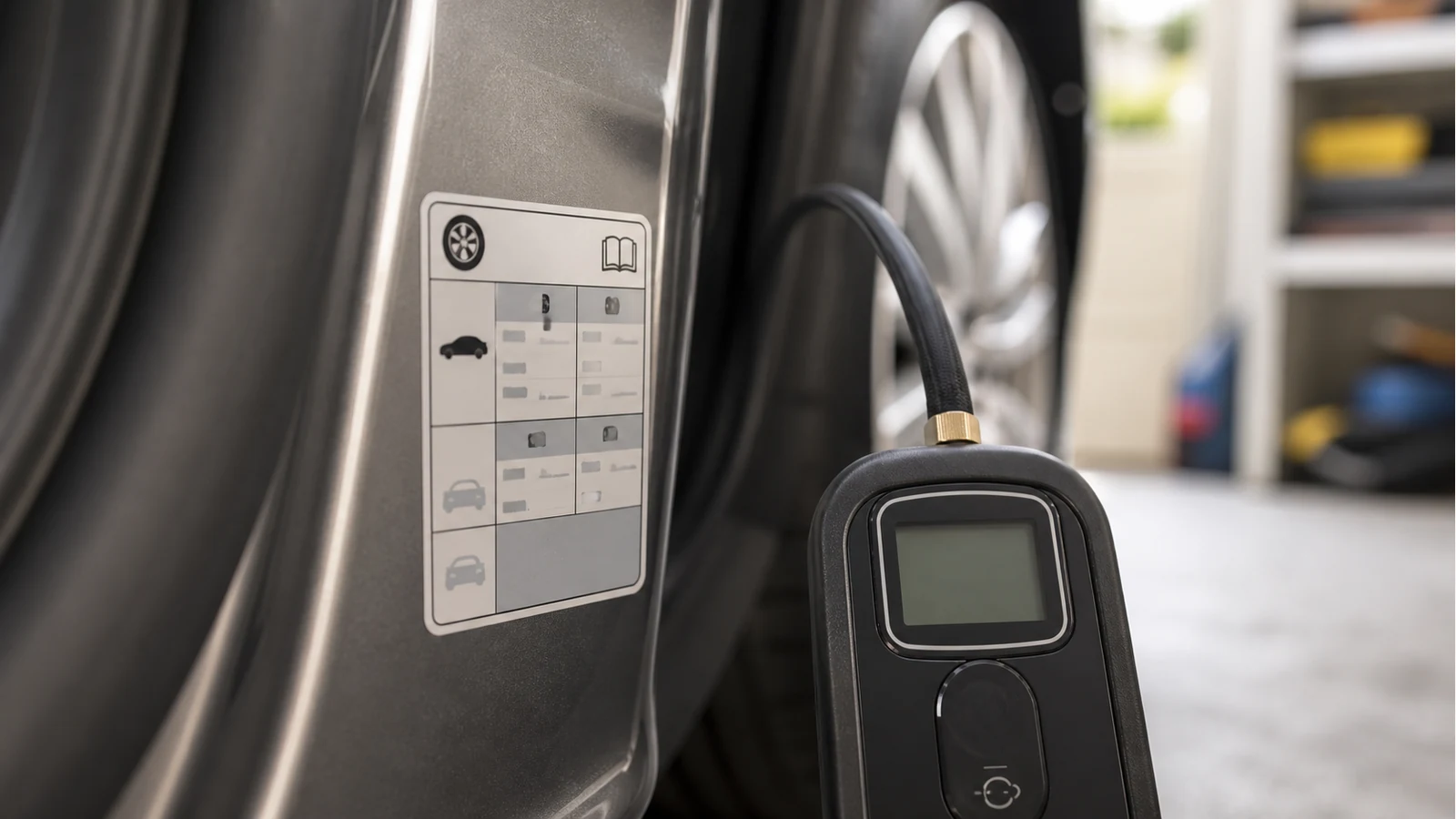
To convert tyre pressure from bar to PSI, multiply bar by about 14.504; to convert PSI to bar, divide PSI by about 14.504. Use the conversion only to match your placard, gauge or pump. The correct target pressure still comes from your vehicle handbook, door-sill label or fuel-flap label.
Quick conversion table
| bar | Approx PSI | Typical use note |
|---|---|---|
| 2.1 | 30.5 | Common passenger-car range, not a recommendation. |
| 2.2 | 31.9 | Round only as your gauge allows. |
| 2.3 | 33.4 | Check front and rear separately. |
| 2.4 | 34.8 | May appear on normal or laden placards. |
| 2.5 | 36.3 | Approximate conversion, not a universal target. |
Why UK drivers see different units
Many UK drivers speak in PSI, while European-built cars may show bar or kPa. Halfords explains PSI, bar and kPa and gives the same bar-to-PSI multiplier used here. The Motor Ombudsman also points drivers to the vehicle placard, handbook or fuel flap rather than a generic chart.
The trap is converting the wrong number. A tyre sidewall may show a maximum pressure, but that is not the normal running pressure for your car. The Highway Code says tyres must be inflated to the manufacturer's specification for the load carried, so the placard figure is the practical authority.
Three-step unit routine
- Find the front and rear pressures on the door sill, fuel flap or handbook. Note whether the figure is normal or fully laden.
- Set your gauge or pump to the same unit if possible. If not, convert once and write the converted figure down.
- Check when the tyres are cold. Use the same gauge for final checks so you are not chasing tiny differences between devices.
Annotated example
If a placard says rear tyres are 2.4 bar for a laden trip, the approximate PSI is 2.4 x 14.504 = 34.8 PSI. On a pump that only accepts whole PSI, that usually means setting about 35 PSI. If the placard gives separate front and rear values, convert each one separately rather than using the rear figure all round.
When not to convert
Do not convert a sidewall maximum and use it as your target. Do not copy a forum pressure from a different engine, wheel size or load. Do not bleed air from a hot tyre just because the reading is above the cold placard figure after a motorway drive.