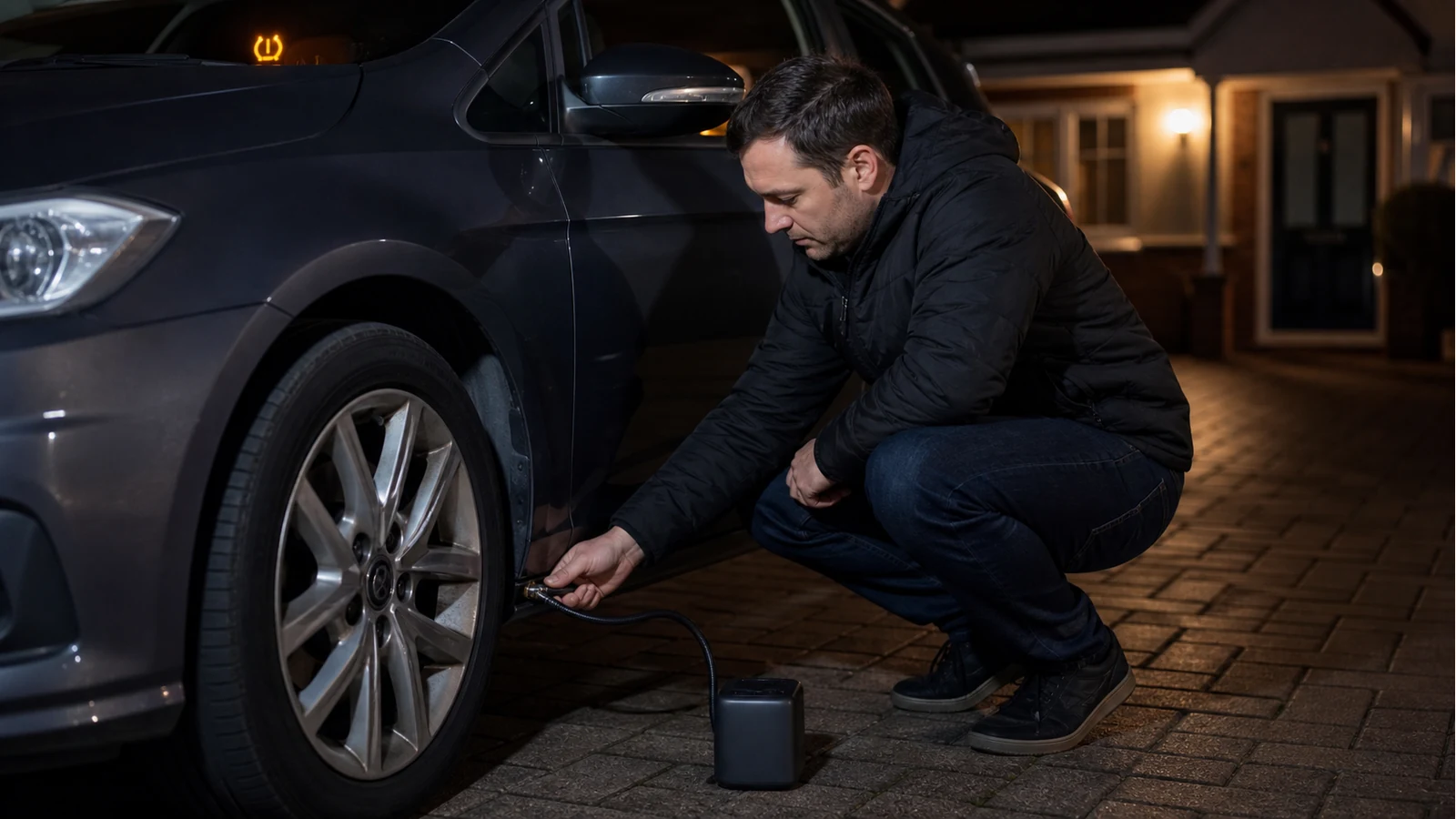
Tpms Warning Light What To Do Uk
If your TPMS warning light comes on in the UK, treat it as a possible low-tyre-pressure warning first. Pull over when it is safe, look for obvious damage, then check all tyres cold against the pressure figures on your door placard, fuel flap or handbook. Do not assume it is only a sensor fault until the pressures and tyres have been checked.
The safe first response
A solid tyre-pressure warning usually means one or more tyres has fallen below the recommended level. Toyota UK explains TPMS warning behaviour and advises drivers to check tyres and adjust pressures as soon as it is safe. The practical sequence is simple: stop safely, inspect the tyre shape and sidewalls, check pressure with a gauge, inflate to the manufacturer figure, then follow your handbook reset process if your car requires one.
The pressure target is not the number moulded into the tyre sidewall. Use the car manufacturer's normal or laden figure for your axle and load. The Highway Code says tyres must be correctly inflated to the vehicle manufacturer's specification for the load carried, and that pressure checks should be done before the journey when tyres are cold.
Solid light or flashing light?
| What you see | Most useful action | Do not do this |
|---|---|---|
| Solid TPMS light | Check all tyre pressures cold, inflate to placard figures, inspect for damage. | Keep driving for days because the car still feels normal. |
| Light after a cold night | Check pressures before the first trip. Cold air can reduce pressure enough to trigger alerts. | Bleed air from hot tyres after a motorway run. |
| Flashing light or light returns quickly | Recheck pressures and arrange sensor or puncture diagnosis. | Repeatedly reset the system without finding the cause. |
| Light after using a spare wheel | Check the handbook; some systems cannot read a spare without a TPMS sensor. | Assume the warning means the spare is correctly inflated. |
Cold-pressure check sequence
- Park somewhere level and safe. If a tyre looks flat or the sidewall is damaged, do not continue a normal journey.
- Find the correct PSI, bar or kPa on the vehicle placard, fuel flap or handbook.
- Check each tyre before driving far. Warm tyres can give misleading readings.
- Inflate to the correct front and rear figures, using the laden setting if the car is carrying passengers and luggage.
- Drive a short distance or use the reset process only as described in your vehicle handbook.
TyreSafe also treats TPMS as a safety aid rather than a replacement for manual checks. That matters because a warning may appear after a significant pressure drop, while a weekly or pre-journey check can catch smaller losses before they become a roadside problem.
When to stop DIY checks
Do not simply top up and carry on if you see a cut, bulge, exposed cord, a screw in the tread, or pressure loss again the next morning. A tyre that repeatedly loses air needs a tyre professional to check the tread, valve, rim and TPMS sensor. If the warning flashes after pressures are confirmed correct, the fault may be in the monitoring system rather than the tyre pressure itself.
FAQ
Can cold weather trigger TPMS?
Yes. A cold snap can lower pressure enough for a warning, especially if the tyres were already close to the threshold. Still check and inflate to the placard figure rather than ignoring it.
Will the warning clear after topping up?
Often it will after correct inflation and a short drive, but some cars require a reset menu or button. Use your handbook because reset locations and procedures vary by make and model.