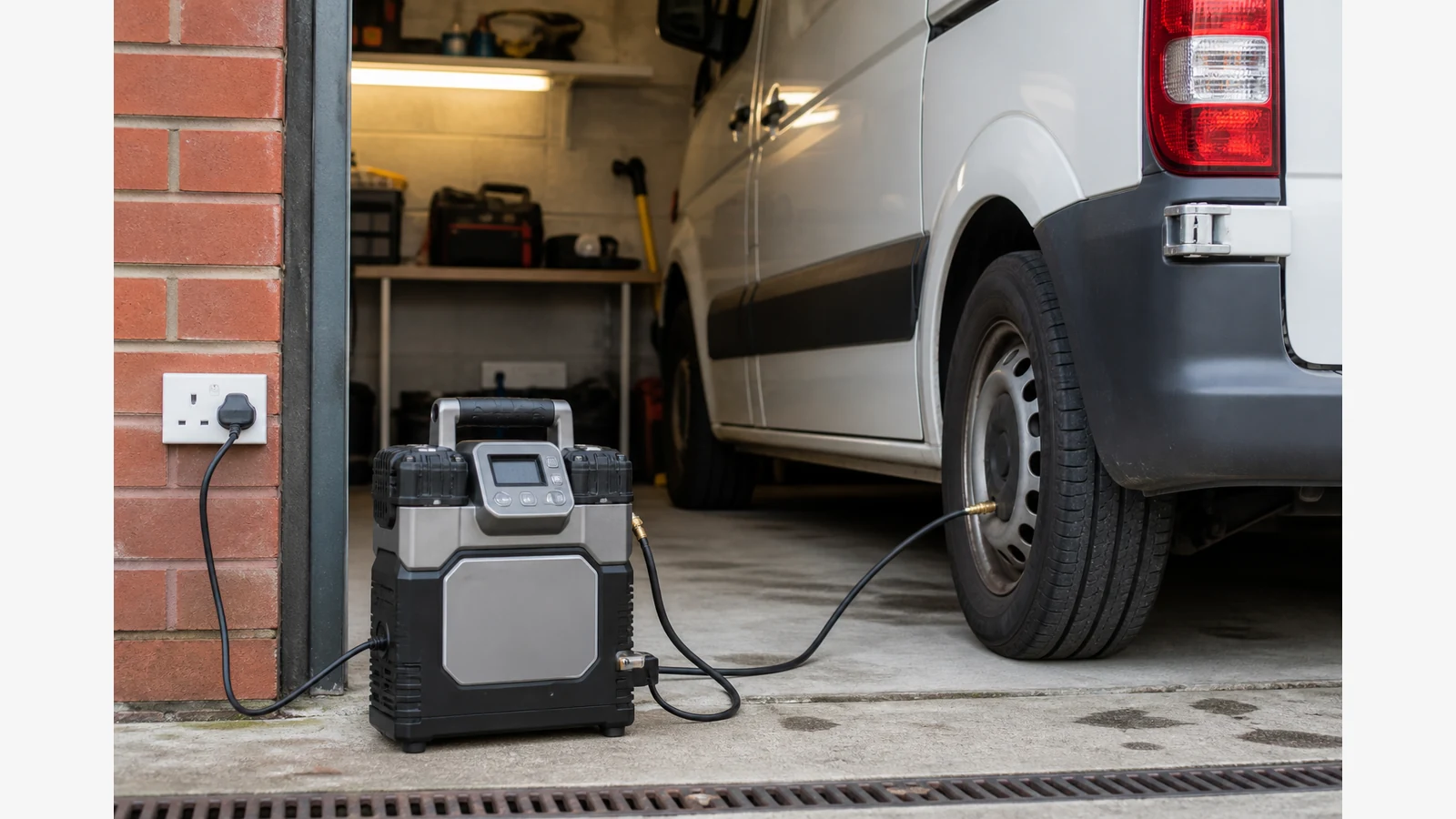
Laden van tyre pressure UK for trades
A loaded UK work van should sit on the manufacturer’s laden placard pressures for that vehicle—not a shared “van PSI” guess and not yesterday’s empty-commute setting. Checking cold in the garage before billable miles, then topping up on site when a corner softens, keeps maintenance off the forecourt queue.
Why load changes the correct pressure
Michelin’s van tyre pressure guidance explains that vans need pressure adjusted as commercial loads change. Tool crates, ladders, and materials shift axle loads through the week, so the empty-van figure on the sticker is the wrong target once the load bay is full. Always read the van’s own door sill, handbook, or manufacturer table for laden conditions.
Do not treat any blog’s example range as universal for every light commercial vehicle. Axle ratings, tyre size, and body type differ; the placard wins every time.
Monday garage 240V, job-site 12V
TyreSafe’s van tyre safety advice recommends checking van pressures monthly and before long trips when cold. A practical trades rhythm is:
- Monday morning: cold check on the driveway or garage wall socket before the first job.
- Set the digital pump to the laden placard figure for each axle.
- During the week: use the 12V socket for a quick top-up if one corner looks soft after loading.
- If the same tyre drops again after a short drive, stop treating it as “just temperature” and book a fitter.
For a household-style multi-vehicle schedule that also covers cars, borrow structure from the two-car driveway pressure routine. Power-mode choices are covered in when to use 12V vs 240V.
Uneven drop vs normal cold loss
All four corners a little low after a cold snap can be temperature-related. One tyre that repeatedly needs air after tool loads is a leak until proven otherwise. Temporary top-ups can get you to a tyre centre; they are not a permanent repair. See slow puncture top-up before the garage for a safe triage sequence.
Portable dual-power pump vs calling a fitter
A portable dual-power compressor is enough when you are restoring placard pressure on an otherwise sound tyre, completing a cold weekly audit, or buying time to reach a fitter. Call a professional when you see cords, bulges, rapid deflation, vibration after a strike, or a tyre that will not hold air. Buying cues for auto-stop digital units are in the auto shut-off digital tyre inflator guide.
Trades laden-pressure decision table
| Situation | Action |
|---|---|
| Cold Monday, van loaded with tools | Inflate to laden placard figures on 240V |
| One soft corner at a job site | 12V top-up to placard, recheck after a short drive |
| Same tyre drops again within hours | Drive carefully to a fitter; do not schedule long empty motorway runs |
| Visible damage or rapid air loss | Stop and arrange recovery or professional repair |
If you need one wired unit for garage mains checks and cigarette-lighter top-ups between jobs, review the Oasser dual-power tyre inflator product details against your van’s placard workflow.