Two Car Tyre Pressure Check Routine Uk
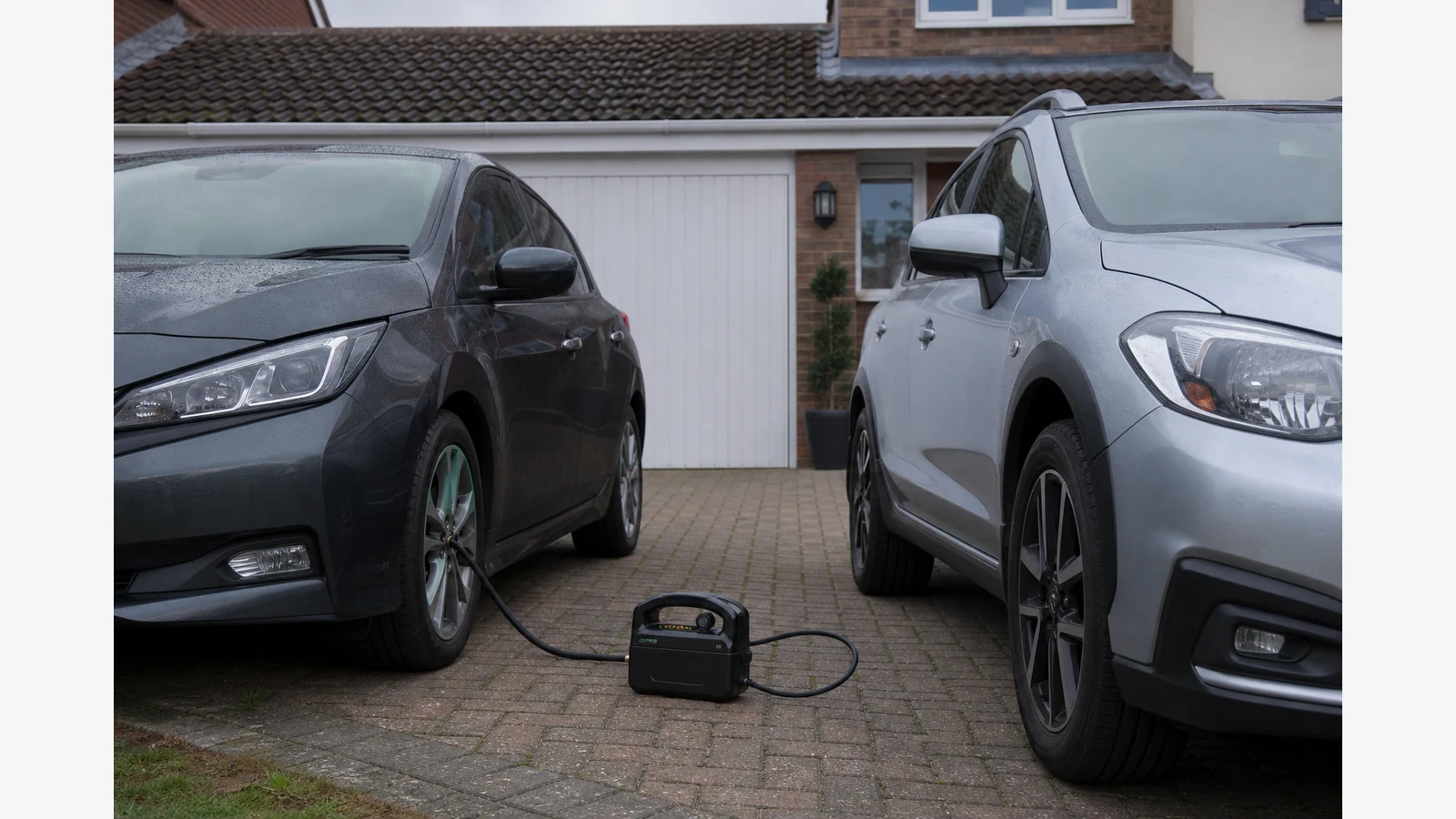
A practical UK two-car driveway routine is simple: park both cars cold, note each placard’s front and rear PSI, then top up with one compressor before the school run or commute week begins. Timing varies with hose reach and how far each tyre is soft, so treat “about ten minutes” as a planning cue—not a guarantee for every household.
Park cold and note each placard first
AA tyre-pressure advice recommends checking pressures regularly when tyres are cold—commonly every couple of weeks. RAC checking guidance likewise points to cold checks and load-specific placard figures. For two cars, write four numbers before you connect anything: car A front/rear and car B front/rear.
- Commuter hatchback: everyday unladen placard figures unless the boot is unusually full.
- School-run or estate car: confirm whether today’s load needs the laden column instead.
- Keep a note in each glovebox or phone so you are not guessing under time pressure.
Use 240V on the driveway, keep 12V for the road
On the driveway, a UK wall socket lets you finish both cars without idling engines for a cigarette-lighter socket. Stow the same dual-power unit afterward so either boot can cover a roadside top-up. For a clear split of when each mode wins, see 12V vs 240V tyre pump use cases.
If your household prefers a digital pump that stops at the set PSI, use the auto shut-off digital tyre inflator guide when comparing units.
Log front and rear targets for both cars
Consistency beats speed. After each Sunday check, tick that both cars match their own placards—not each other. Front and rear pressures often differ; copying one number across all eight corners is a common mistake in multi-car homes.
Before a packed holiday week, switch to the laden figures and follow the fully loaded car tyre pressure holiday checklist. Work vans need their own load logic—see laden van tyre pressure for trades if one “household” vehicle is a loaded van.
Sunday two-car routine (template)
- Park both cars overnight or for several hours so tyres are cold.
- Open each door sill or handbook and note front/rear targets.
- Connect a dual-power pump to a driveway 240V socket.
- Set the first car’s front PSI, inflate, then do the rear; repeat for the second car.
- Refit valve caps, coil cables, and leave the pump accessible in one boot for 12V use.
One shared dual-power compressor is usually enough for a two-car household that wants driveway mains checks and occasional roadside 12V top-ups—compare kit details on the Oasser dual-power tyre inflator page when you are ready to choose hardware.