Tyre Pressure For Fully Loaded Car Uk
Before a packed UK holiday drive, set each tyre to the fully laden figure on your door-sill placard or handbook—not a guessed PSI and not the everyday empty-car number. Check pressures when the tyres are cold, then revert to the normal placard settings after you unload.
Find unladen vs fully laden figures first
Most UK cars list more than one pressure. The driver’s door sill, fuel-flap sticker, or owner’s handbook usually separates normal daily loads from fully loaded conditions with passengers and luggage. RAC guidance on checking tyre pressure notes that manufacturers publish separate figures for unloaded and fully loaded vehicles—use the laden column when the boot, roof box, and rear seats are full.
Write the front and rear laden targets down before you start. Do not copy a neighbour’s numbers or invent a “holiday PSI”: the placard is the only correct source for your car.
Cold-check all four tyres plus the spare
Kwik Fit’s holiday tyre-pressure advice stresses checking pressures before a trip when boots are packed. Do the reading before a long run if you can: cold tyres give a more reliable baseline than hot motorway rubber.
- Park on level ground and remove valve caps carefully.
- Compare each corner with the laden placard figure for that axle.
- Include the spare or spacesaver—many holiday punctures turn into spare-wheel problems.
- Look for one tyre that is soft while the others match; that pattern can point to a slow leak rather than overnight temperature loss alone.
Set laden PSI for motorway miles, then reset after unloading
Once luggage is in, inflate to the laden targets before you join a motorway. After you empty the car at home or the campsite, return to the normal daily placard settings so the tyres are not left on a laden setting indefinitely. Front and rear figures can differ—follow both, not an average.
If you need a calm driveway method for two household cars before departure week, see our Sunday two-car driveway pressure routine.
Driveway 240V and roadside 12V top-ups
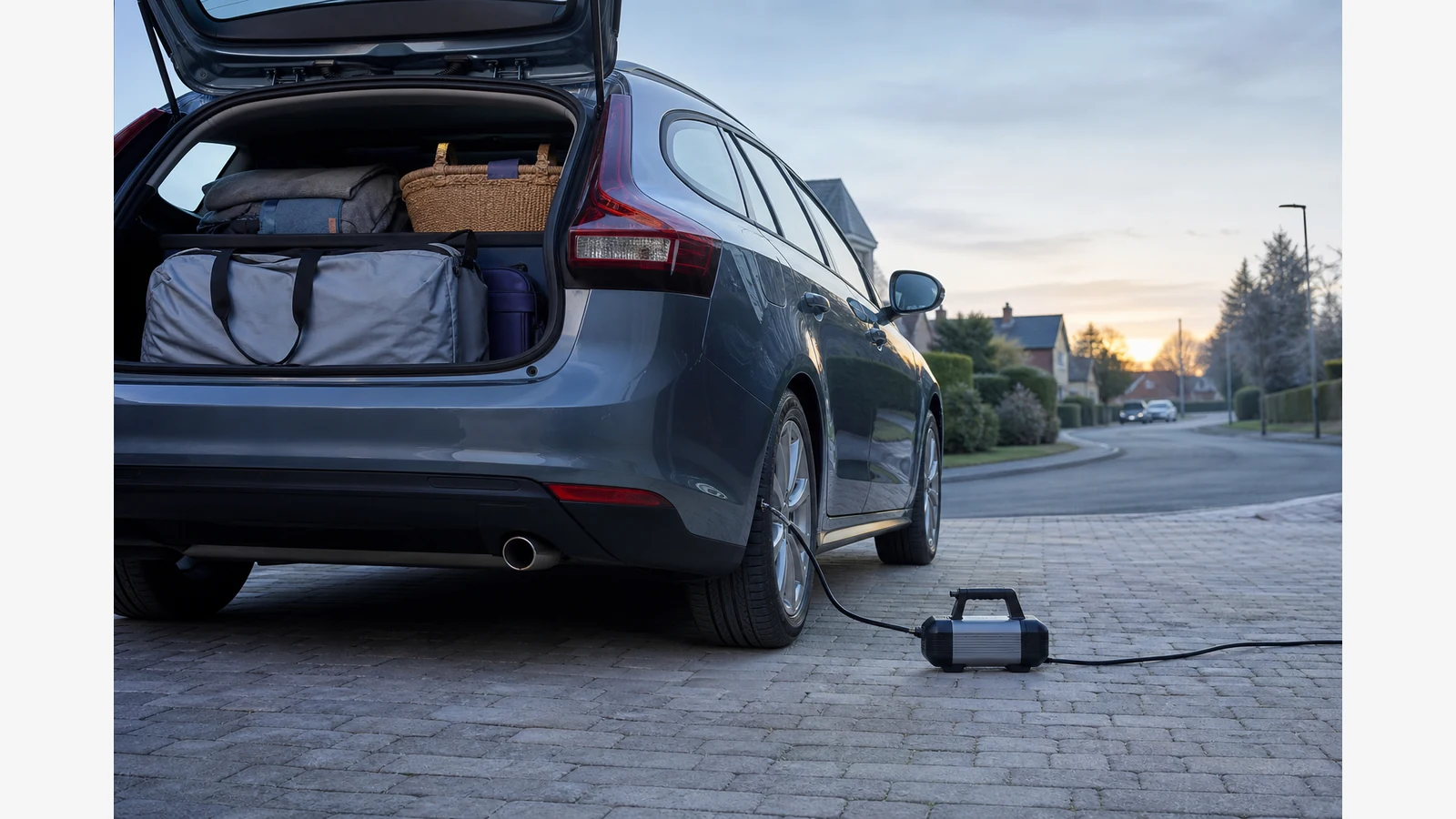
A practical holiday kit is one dual-power compressor: use a UK mains socket on the driveway for the full cold check, then keep the same unit in the boot for cigarette-lighter top-ups away from home. Choosing when each mode helps is covered in when to use 12V vs 240V. If you prefer a pump that stops at a preset PSI, read the auto shut-off digital inflator buying checklist.
When a soft tyre keeps dropping after a careful top-up, treat it as a possible slow puncture and plan a fitter visit rather than another long motorway stint—see slow-puncture top-up before the garage.
Holiday laden-pressure checklist
- Read the door-sill or handbook laden figures for front and rear.
- Cold-check all four tyres and the spare before or just after packing.
- Inflate to laden PSI for the loaded motorway run.
- Pack a dual-power pump for driveway mains and roadside 12V use.
- After unloading, reset to the normal placard pressures.
If you want one driveway-and-boot compressor for that workflow, review the Oasser dual-power tyre inflator product page for power options and kit contents.