Slow Puncture Top Up Before Garage Uk
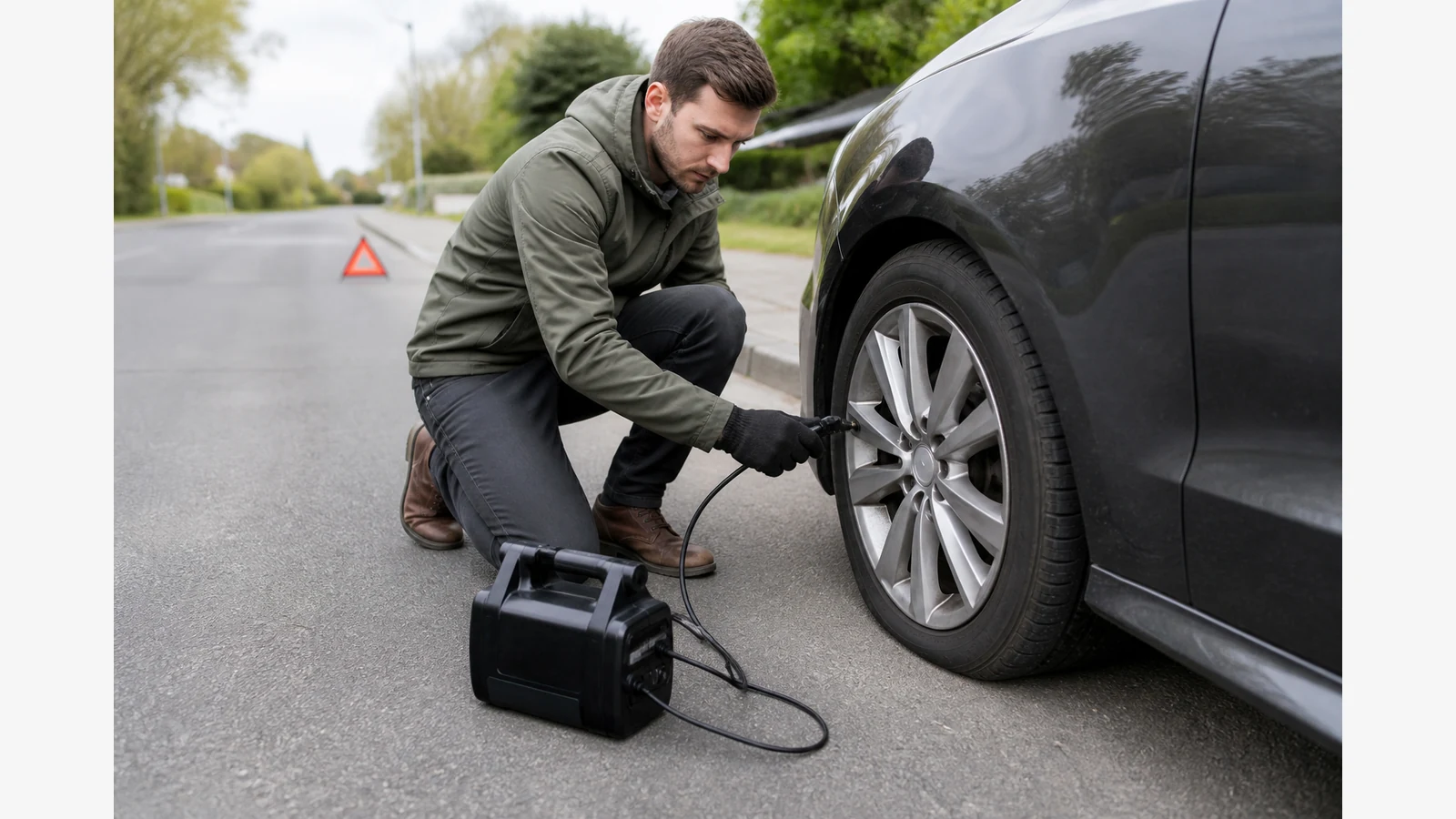
If one tyre keeps going soft while the others hold, treat it as a possible slow puncture: cold top-up to the placard PSI, drive carefully to a UK tyre fitter, and do not treat sealant or DIY plugs as a finished professional repair. Long-distance running on a known leak is not a safe plan.
Uneven drop versus cold-weather loss
Rescue Tyres’ cold-weather pressure note highlights a useful triage: one tyre that keeps dropping after a top-up points to a leak, not just temperature. Overnight cold can lower all four corners together; a single soft tyre after you restored placard pressure is different.
- All four low after a cold snap → reinflate to placard and monitor.
- One corner repeatedly soft → plan a fitter visit after a careful top-up.
- Rapid deflation, bulge, or cords showing → stop driving and arrange recovery.
Cold top-up, then a short recheck
RAC guidance on checking tyre pressure covers slow-puncture signs and reminds drivers that temporary sealant has limits—professional inspection and repair are preferred. A practical sequence:
- Check all four tyres cold against the door-sill figures.
- Inflate the soft tyre to the correct placard pressure.
- Refit the valve cap and drive a short, low-stress route.
- Recheck; if pressure has fallen again, go straight to a tyre centre.
An auto-stop digital pump helps you avoid overshooting while you work quickly—see the auto shut-off digital tyre inflator guide. Power choice for driveway versus roadside is covered in 12V vs 240V tyre pump use.
Drive carefully to a fitter; sealant is temporary
Use the top-up only to reach a garage or mobile fitter. Keep speed moderate, avoid hard cornering and heavy motorway miles, and listen for worsening vibration or thumping. Sealant kits and plug kits may buy time depending on damage type, but they are not a substitute for a professional assessment of whether the tyre can be repaired or must be replaced.
Diagnostic ladder
- Confirm which tyre is low versus a uniform cold drop.
- Restore placard PSI with a portable compressor.
- Short recheck drive.
- If it holds → monitor and still inspect if the cause is unknown.
- If it drops again → fitter now; do not schedule a long trip “to see.”
Household holiday loads and multi-car routines still use placard discipline—see fully loaded car tyre pressure for holidays and the two-car driveway routine—but a repeating single-tyre loss overrides a normal schedule.
Keeping a dual-power pump in the boot means you are not stuck waiting on a forecourt queue for a temporary top-up. Product options are listed on the Oasser dual-power tyre inflator page.